Kingdom Insights
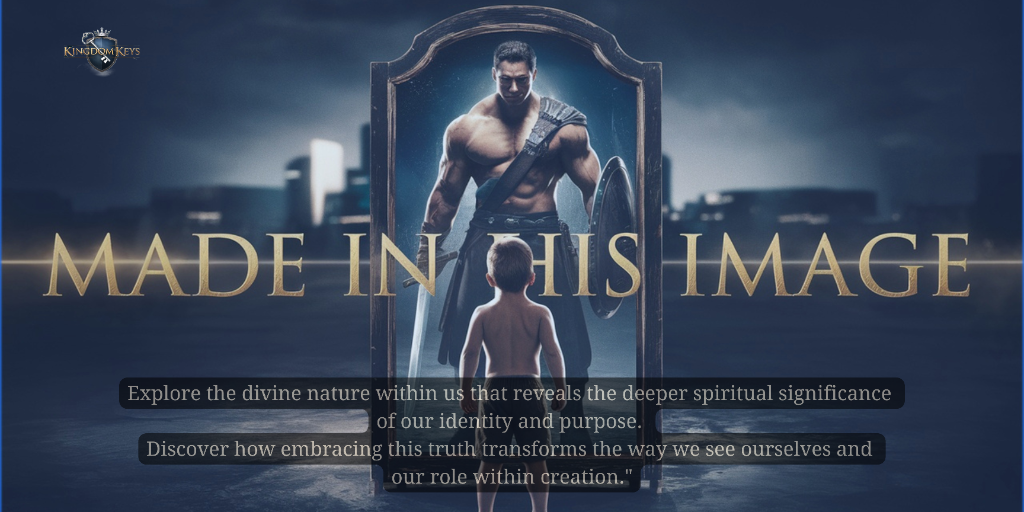
Made in the Image and Likeness of God
Rediscovering Your Divine Blueprint
Section One
More Than A Phrase
Rediscovering the Significance of Our Original Design
"And God said, Let us make man in our image, after our likeness..."
Genesis 1:26 (KJV)
There are certain passages of Scripture that become so familiar that we can repeat them without ever stopping to consider the extraordinary truth they contain.
One of those passages is found in the opening chapter of Genesis, where God declares that humanity was created in His image and after His likeness.
For many of us, these words have been part of our spiritual vocabulary for as long as we can remember.
We have heard them preached, taught, quoted, and repeated.
But have we ever truly considered what they mean?
What does it mean to be made in the image of a God who is Spirit?
And if we were created in God's image and likeness, why do so many of us spend our lives seeing ourselves through images formed by fear, rejection, inadequacy, shame, and limitation?
Before the World Told You Who You Were
Consider something remarkable about the creation account.
Before humanity established civilizations, developed religious traditions, or accumulated achievements, Scripture had already declared something about our identity.
Humanity was created in the image of God.
"So God created man in his own image, in the image of God created he him; male and female created he them."
Genesis 1:27 (KJV)
This declaration was not presented as a reward for good behavior or something humanity had to earn.
It speaks to a dignity that existed before the labels, expectations, and judgments through which we so often measure ourselves.
Your worth did not begin when someone recognized it.
Your dignity was not created by someone else's approval.
And your value does not disappear because of what you have experienced or what someone has said about you.
Yet throughout life, we acquire beliefs about ourselves through family, culture, religion, relationships, and personal experiences.
Some of those beliefs help us recognize our potential.
Others can leave us seeing ourselves through the limitations of our past.
But what if the image you have learned to see is not the complete picture of who you were created to be?
Perhaps the invitation within this familiar Scripture is not simply to acknowledge our origin, but to begin reconsidering our identity.
The Kingdom Key
Before we can consciously express what we were created to reflect, we must begin to examine the images through which we have learned to see ourselves.
Section Two
The Traditional Understanding
What Have We Been Taught About the Image of God?
For generations, Christians have understood the declaration that humanity was created in God's image as a revelation of our unique relationship with the Creator.
Because Scripture teaches that God is Spirit (John 4:24), many biblical teachers have explained that bearing God's image involves something deeper than physical appearance.
It speaks to qualities and capacities through which human beings can reflect something of God's character.
Our ability to love, reason, create, form relationships, exercise moral judgment, and care for creation has often been understood as part of what distinguishes humanity's calling.
In Genesis 1:28, humanity is entrusted with responsibility within creation.
This suggests that bearing God's image involves not only identity, but also how we live and what we do with what has been entrusted to us.
Yet Scripture also reminds us that reflecting God's character is something we must learn to express through our choices.
We may possess the capacity for love while choosing fear.
We may have the ability to create while allowing limiting beliefs to discourage us from using our gifts.
Being created in God's image does not mean that everything we think or do automatically reflects God's character.
But it does invite us to consider what we were created to reflect.
And this brings us to an intriguing question:
What if being made in the image of the Creator has implications not only for who we are, but also for how we participate in shaping the lives we experience?
The Kingdom Key
“What if being made in God's image is not simply a declaration of who we are, but also a revelation of what we were created with the capacity to express?”
Section Three
A Shift in Perspective
From Reflecting God's Nature to Expressing It
We have often been taught that being made in God's image means we possess certain qualities that distinguish us as human beings.
But perhaps there is another dimension worth considering.
What if the image of God is not only something we were created to bear, but something we are also invited to consciously express?
Think about the difference between possessing the capacity to love and actually expressing love through our words and actions.
Or between having the ability to create and intentionally using that ability to bring something meaningful into existence.
The potential may be present, yet its expression depends, in part, on our awareness, choices, and willingness to act.
Jesus offered an intriguing perspective when He taught that a tree is known by its fruit (Matthew 7:16–20).
His teaching reminds us that what is within us becomes recognizable through what our lives produce.
Could a similar principle invite us to examine how we express the qualities we associate with God's character?
If God is loving, how might we become more intentional about expressing love?
If God is wise, how might we cultivate wisdom in our decisions?
And if God is Creator, what might that suggest about our own capacity to imagine, develop, nurture, and bring meaningful possibilities into being?
Being created in God's image does not mean that we are the God who governs the universe.
But what if it means that the possibilities placed within us are far greater than the limitations we have learned to accept?
What if our potential is not defined by what we have already accomplished, what others believe is possible for us, or even what we currently believe about ourselves?
Perhaps part of discovering our divine likeness is awakening to capacities we have yet to recognize, develop, and express.
And perhaps the question is not simply what we are capable of today, but what might become possible as we grow into a fuller expression of what God has placed within us.
The Kingdom Key
“What if the limitations we have accepted about ourselves reveal more about what we have learned to believe than about what God has made possible within us?”
Section Four
The Creator and the Creative Within
Exploring the Possibilities of Our Divine Design
When we open the Bible, we encounter God as Creator.
"In the beginning God created the heaven and the earth."
Genesis 1:1 (KJV)
Throughout the creation account, we see a remarkable pattern: God speaks, brings forth, establishes order, and calls possibilities into expression.
Now consider the declaration that follows:
Humanity was created in the image and likeness of this Creator.
Have we ever considered what that might suggest about the creative possibilities within us?
We often associate creativity with artists, musicians, writers, and inventors. But what if creativity reaches into nearly every dimension of human experience?
We create through the ideas we develop, the solutions we discover, the relationships we nurture, and the opportunities we recognize and pursue.
Even the direction of our lives can be influenced by what we believe is possible, what we choose to focus upon, and the actions we are willing to take.
Consider two people facing similar challenges.
One may see only obstacles, while another begins searching for possibilities.
The circumstances may be similar, but their perceptions can influence the choices they make and the paths they explore.
What we believe is not merely a response to the life we experience.
Our beliefs can also help shape the experiences we encounter, the possibilities we recognize, and the outcomes we cultivate.
Scripture repeatedly invites us to consider the relationship between what we carry within and what becomes expressed through our lives.
Could it be that our thoughts, beliefs, faith, words, and actions participate in shaping our experiences in ways we have not yet fully recognized?
And if so, what might begin to change as we become more conscious of what we are believing, nurturing, and expressing?
The Kingdom Key
“What if being made in the image of the Creator means that we carry possibilities within us that are waiting to be recognized, cultivated, and expressed?”
Section Five
The Images We Learned to Wear
When Life's Experiences Become Our Identity
Long before we began consciously examining who we are, life was already teaching us what to believe about ourselves.
Through family, relationships, culture, religion, and personal experiences, we began forming an inner picture of our identity.
Some experiences encouraged us to recognize our worth and possibilities.
Others may have taught us to question our abilities, doubt our value, or fear what we could become.
And often, we accepted these impressions before we were mature enough to examine whether they were true.
Over time, what we experienced became what we believed.
And what we believed began influencing what we expected, accepted, and expressed.
Consider a child repeatedly told, "You'll never amount to anything."
Years later, those words may still influence the opportunities that person pursues, the risks they avoid, and the possibilities they struggle to imagine.
But here's something worth considering:
What if some of the limitations we call our identity are actually beliefs we acquired along the way?
Scripture offers an intriguing invitation:
"And be not conformed to this world: but be ye transformed by the renewing of your mind..."
Romans 12:2 (KJV)
Perhaps renewing the mind involves more than changing individual thoughts.
It may also invite us to examine the deeper beliefs through which we have learned to interpret ourselves and our possibilities.
And if those beliefs were learned, might some of them also be reconsidered, healed, and transformed?
The Kingdom Key
“What if some of the images we have mistaken for our identity were never reflections of who God created us to be, but reflections of what life taught us to believe?”
Section Six
From Knowing to Being
Renewing the Mind and Living What We Believe
There is a difference between knowing something intellectually and allowing that understanding to become part of how we live.
We can believe that we were created in God's image while continuing to think, speak, and make decisions from a diminished image of ourselves.
But what might begin to change when we become conscious of that difference?
The Apostle Paul offers a powerful invitation:
"And be not conformed to this world: but be ye transformed by the renewing of your mind..."
Romans 12:2 (KJV)
Notice the relationship between renewal and transformation.
What if renewing the mind is not simply about replacing negative thoughts with positive ones, but about learning to see ourselves, our circumstances, and our possibilities through a deeper understanding of who we were created to be?
Perhaps transformation begins when we recognize a belief that has limited us and become willing to question its authority.
Perhaps it continues when we choose a new response, speak with greater intention, exercise faith, or take a step toward something we once considered impossible.
And perhaps, through continued awareness and practice, what once seemed unfamiliar gradually becomes a more natural expression of who we are becoming.
We do not have to wait until every limiting belief has disappeared before we begin living from a greater understanding of ourselves.
We can begin where we are, with what we have, taking one conscious step at a time.
After all, what if discovering the image and likeness of God within our created identity is not merely about recognizing what we possess, but learning to express more fully what has been placed within us?
The Kingdom Key
“What if transformation begins when we stop allowing yesterday's understanding of ourselves to determine tomorrow's possibilities?”
Reflection
A Moment of Reflection
Seeing Yourself Through a Different Lens
Before moving on, take a moment to consider what you've discovered.
You may have heard that you were created in God's image countless times.
But have you considered how that understanding might influence the way you see yourself, the possibilities you recognize, and the life you are becoming?
Perhaps the most meaningful discovery begins with a few simple questions:
What have I come to believe about myself that may not reflect who God created me to be?
Where might I be allowing an old experience, someone else's opinion, or a familiar fear to define what I believe is possible?
And what might begin to change if I approached that part of my life from a renewed understanding of my identity?
A Simple Practice: Look Again
Choose one belief about yourself that you would like to examine.
Rather than immediately judging it as right or wrong, become curious about where it came from.
Ask yourself:
Where did I learn to believe this?
Has this belief helped me grow, or has it limited what I am willing to consider?
What might a more life-giving understanding look like?
Then choose one small action that reflects the possibility you are beginning to recognize.
For example:
Perhaps you've spent years believing, “I'm not capable of doing anything meaningful.”
Instead of accepting that belief as the final truth about yourself, consider asking:
“What if I've been measuring my possibilities by what I've experienced rather than by what God has placed within me?”
Then take one small step.
Write down an idea you've been afraid to pursue, explore something you've always wanted to learn, or begin a project you've repeatedly told yourself you couldn't accomplish.
The purpose isn't to prove everything in a single day.
It's to begin giving a new possibility an opportunity to find expression through your actions.
Sometimes transformation begins with the willingness to question an old belief and take one step beyond it.
Remember: You are not required to have every answer before you begin discovering something more.
Closing
Your Journey Continues — There Is More to Discover
Being made in the image and likeness of God is a profound declaration—one that invites a lifetime of discovery.
What we've explored here is only the beginning.
As you continue your journey, consider what it might mean to move beyond knowing that you were created in God's image toward more consciously expressing the possibilities, character, and purpose placed within you.
Through future teachings, guided reflections, and practical experiences, The Divine Blueprint will invite you to explore these discoveries more deeply.
For now, carry this question with you:
What might become possible if I begin seeing myself through the possibilities God has placed within me rather than the limitations I have learned to accept?
Your journey of discovery continues.
Let the Journey of Discovery Continue
Every new insight opens another doorway to understanding.
Join The Kingdom Chronicle to receive updates about new Kingdom Insights, upcoming teachings, reflection resources, and opportunities to explore the Kingdom Keys journey more deeply.
Subscribe to The Kingdom ChronicleSubscription is not yet open on this page.
Coming Soon